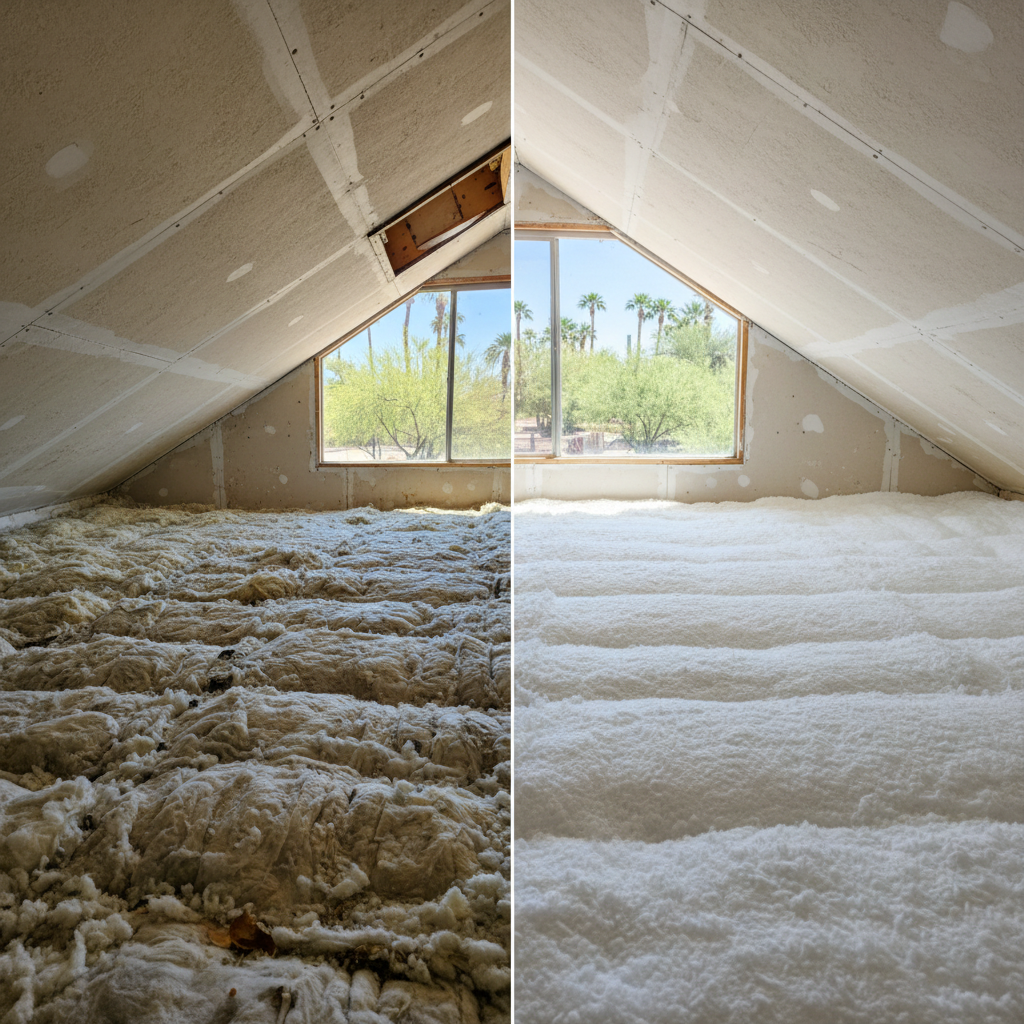
Alright, let's talk about your attic. Here in Mesa, that attic isn't just a storage space; it's a battleground against the scorching Arizona sun. The insulation up there is your first line of defense, and getting it right can make a huge difference in how comfortable your home feels and how much you're shelling out for AC every month. You've got a couple of main contenders when it comes to upgrading or installing new insulation: spray foam and blown-in fiberglass. So, which one's the champ for our desert climate?
The Contenders: Spray Foam vs. Blown-In Fiberglass
I've been in this business a long time, seen all sorts of attics, from those old ranch homes in Dobson Ranch to the newer builds out by Gateway Airport. And I can tell you, both spray foam and blown-in fiberglass have their place. But they're definitely not created equal, especially when you consider our specific challenges here in Mesa.
Blown-In Fiberglass: The Traditional Go-To
This is probably what you picture when you think of attic insulation. It's those fluffy, loose fibers that get blown into your attic space, creating a thick, even layer. It's made from recycled glass, which is a plus for some folks.
- Cost: Generally, blown-in fiberglass is going to be your more budget-friendly option upfront. It costs less per square foot to buy and install. This makes it attractive for homeowners looking to improve their insulation without a huge initial investment.
- R-Value: You can get a good R-value with blown-in fiberglass. To hit the recommended R-49 or R-60 for our climate, you'll need a pretty deep layer of it—sometimes 16 to 20 inches. It works by trapping air within those fibers, which slows down heat transfer.
- Installation: It's a fairly quick process. A crew comes in with a big machine, blows the material through a hose, and covers your attic floor. It's not usually too disruptive.
- Durability & Maintenance: Fiberglass is pretty durable. It won't settle much over time if installed correctly, and it resists mold and pests. However, if it gets wet, it loses its effectiveness and can take a long time to dry out, sometimes leading to other issues. You also need to be careful not to compress it if you're ever up in the attic, as that reduces its R-value.
- Appearance: It looks like a big, fluffy blanket of insulation. Not exactly pretty, but it's in your attic, so who cares, right?
Spray Foam Insulation: The Modern Solution
Now, spray foam is a whole different beast. We're talking about a liquid polymer that gets sprayed into place, expanding rapidly to create a continuous, airtight seal. At Spray Foam Pros of Mesa, we mostly work with closed-cell spray foam for attics, especially here in Arizona, because it handles moisture and heat so well.
- Cost: Let's be upfront: spray foam is a bigger investment initially. It costs more per square foot than blown-in fiberglass. But don't let that scare you off right away; there's a reason for it, and it often pays for itself over time.
- R-Value: This is where spray foam shines. Closed-cell spray foam has a much higher R-value per inch than fiberglass. This means you need less thickness to achieve superior thermal performance. More importantly, it creates an air seal. This is HUGE in Mesa. Fiberglass insulates, but it doesn't stop air leaks. Spray foam does both, and that's where you get massive energy savings.
- Installation: This is a job for pros, no question. It requires specialized equipment and training to apply correctly. It expands and cures quickly, forming a rigid barrier.
- Durability & Maintenance: Once it's in, it's in for good. Spray foam doesn't settle, doesn't degrade, and isn't a food source for pests. It's also an excellent moisture barrier. Because it forms a rigid layer, it can even add structural integrity to your roof deck. You won't need to worry about maintenance, ever.
- Appearance: It looks like a hard, textured, often yellowish or off-white surface. It completely encapsulates the underside of your roof deck or covers your attic floor, creating a much cleaner, sealed environment.
The Mesa, AZ Factor: What Really Matters Here
Here's the deal for us desert dwellers: heat gain and air leakage are your biggest enemies. Our summer temperatures are brutal, and any tiny crack or gap in your attic is letting that hot air pour in, making your AC work overtime. Think about those older homes in the Alma School area – they often have leaky attics that are just bleeding cool air.
- Air Sealing: This is the game-changer. Blown-in fiberglass insulates, but it doesn't stop air movement. You can have 20 inches of fiberglass, but if hot air is still seeping in through gaps around vents, wiring, or framing, you're losing money. Spray foam creates an airtight seal, stopping that air movement dead in its tracks. This alone can cut your energy bills significantly.
- Moisture Control: While Mesa isn't known for humidity, we do get monsoon storms. Closed-cell spray foam acts as a vapor barrier, which can be beneficial in preventing moisture issues, especially if you're considering converting your attic into a conditioned space.
- Ductwork: Many homes here have their HVAC ductwork running through the attic. If your attic is super hot, those ducts are working harder to deliver cool air. With spray foam applied to the roof deck, your attic becomes a semi-conditioned space, meaning your ducts aren't fighting a 150-degree environment. That's efficiency right there.
My Honest Recommendation for Mesa Homeowners
If your budget allows for it, my strong recommendation for homeowners in Mesa, AZ, is almost always spray foam insulation. Yes, the upfront cost is higher, but the long-term benefits in energy savings, comfort, and durability are unmatched, especially in our extreme climate. It's not just insulation; it's an air seal, a moisture barrier, and a sound dampener all in one.
You'll notice the difference immediately. Your AC won't run as long, your home will feel more consistently comfortable, and you'll have peace of mind knowing your attic is truly sealed against the elements. It's an investment that truly pays off, not just in dollars saved, but in a more comfortable home life for you and your family.
If spray foam isn't in the cards right now, blown-in fiberglass is still a significant improvement over old, inadequate insulation. Just make sure you address any major air leaks before blowing it in. But if you're looking for the absolute best performance and long-term solution for a Mesa home, spray foam is the way to go.