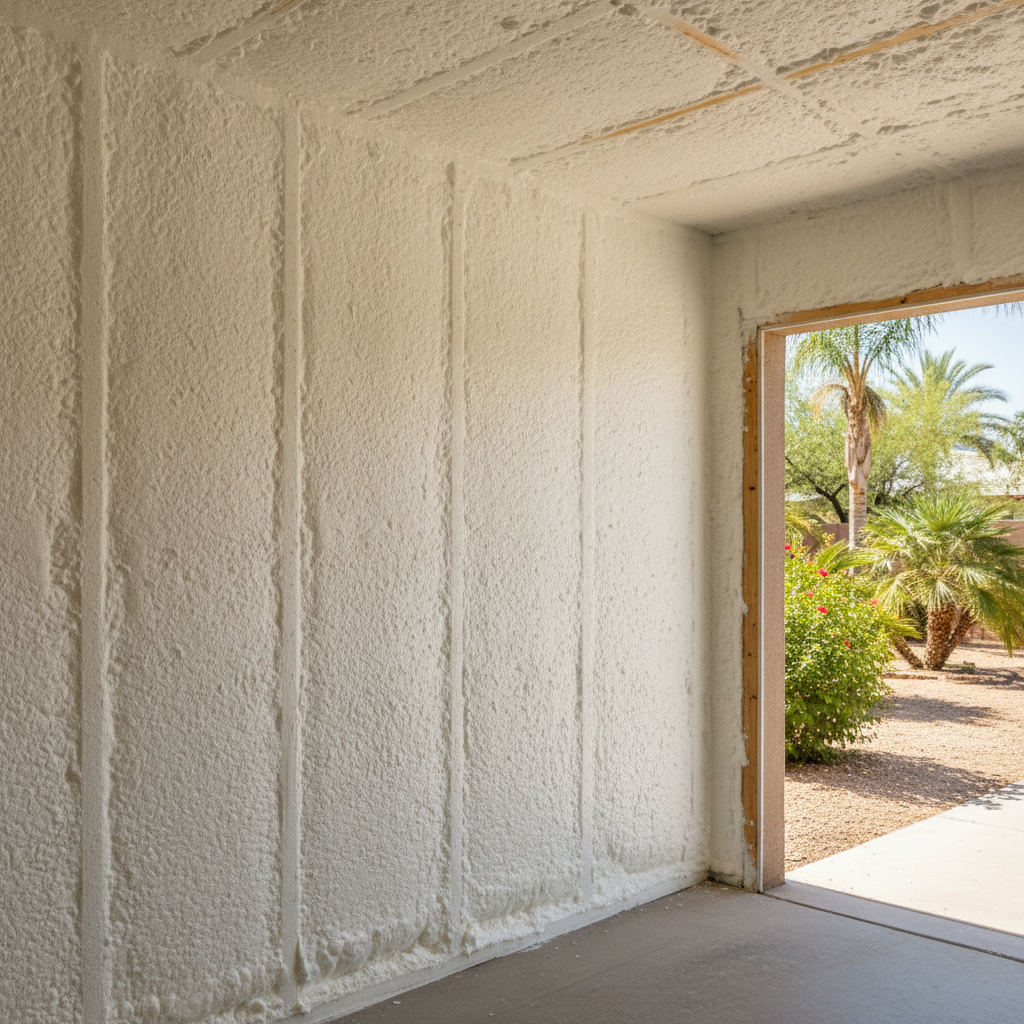
Homeowners in Mesa often walk into their garage in July and feel like they have just stepped inside an oven. The desert heat turns uninsulated garages into massive thermal radiators that bake the rest of the house. Spray Foam Pros of Mesa has heard just about every question a homeowner can ask regarding garage temperature control in Mesa, AZ. These common questions about garage insulation in Mesa are answered straight-up with zero marketing fluff.
Will insulating my garage actually lower my electric bill?
Garage Insulation in Mesa does lower your electric bill, but it depends entirely on how your garage connects to the rest of your home. If you share a common wall or have a bedroom directly above the garage, that uninsulated space is bleeding heat straight into your living areas. When your garage stays cooler, your AC does not have to work nearly as hard to fight off the heat radiating through that shared drywall. If your garage is completely detached and you never go in there except to grab a trash can, the energy savings inside the house will not be as dramatic. But if you use it as a workshop or home gym, the comfort difference is significant.
Can I just use fiberglass batts, or do I need spray foam?
You can use fiberglass, but open-cell or closed-cell spray foam performs significantly better in our extreme Mesa climate. Fiberglass batts sag over time, and they do not stop air infiltration. When temperatures hit 115 degrees outside, radiant heat pushes right through standard batts if there is no air barrier. Spray foam expands to fill every crack and gap, creating a tight seal that stops both heat transfer and hot desert dust from blowing inside every time the wind kicks up.
What about the garage door? Does insulating the walls even matter if the door isn't insulated?
That is a trap a lot of homeowners fall into. Your garage door is essentially a giant metal heat conductor facing the sun all afternoon. If you insulate the walls and ceiling but leave a cheap single-layer metal door bare, your garage is still going to bake. You need to insulate the door or upgrade to an insulated model if you want real results. Pair that door upgrade with Spray Foam Insulation in Mesa on the exterior walls, and you will finally be able to spend time out there without melting.
Will insulation protect my tools and stored items from the heat?
Spray Foam Pros of Mesa makes sure the insulation helps regulate the temperature, but keep in mind that a standard residential garage in Arizona is not typically tied into your central HVAC system. Insulation slows down heat gain and loss, meaning your garage will not hit 130 degrees in the afternoon, but it will still get warm. If you are storing electronics, leather furniture, or musical instruments, you will still want a dedicated mini-split AC unit out there alongside proper insulation to keep things truly safe.
How long does a garage insulation project take?
For most standard two-car garages in neighborhoods like Las Sendas or Dobson Ranch, Spray Foam Pros of Mesa can knock out a spray foam or blown-in insulation job in 1 to 3 days. Prep work takes a bit of time since we have to tape off your tracks, sensors, and garage door panels if we are applying foam directly, but the actual application goes fast. You will just need to keep the space clear and give it a little time to cure before moving all your gear back in.
Is it worth DIYing or should I hire a pro?
You can buy DIY kits at the big box store for small touch-ups, but doing a whole garage yourself usually turns into an expensive mess. Professional rigs mix the chemicals at precise temperatures and pressures that DIY cans just cannot match. If the mix is off, the foam will not cure right, and you will be stuck scraping sticky foam off your drywall. Call Spray Foam Pros of Mesa for Garage Insulation work in Mesa, AZ.